Architectural heritage | Literature | Fine arts | Music | Sports | Intellectual life
Over the centuries there have been many western writers who have and still do write about ‘the mystic east’, however as would be understandable the relatively minor foreign communities were usually ignored.
Having first hand access to plentiful writing material, Levantines / long term residents of different nationalities produced many authors such as:
| Author | Title + date/place | Details |
| Paul Rycaut (1629-1700) |
The history of three famous fraudsters (Sabbatai
Zevi) - 1669 The present state of the Greek and the Armenian churches (Aegean) - 1679 The History of the Turkish Empire 1623-77 - 1680 The history of the present state of the Ottoman empire - (1667) 1686 - London |
In addition 11 long articles. Between 1661-1667 was secretary to the British Ambassador in Istanbul. Arrived in Smyrna as a consul in 1667, returned to London 1678. Clearly a good observer and a prolific writer, he amongst any other helped reveal the nature of Turkey in the West. |
| André Chénier | Jeu de paume (1791), Hymne sur les Suisses (1792) etc. | Born in Istanbul from a French trader, Louis Chénier, established in Istanbul and Elisabeth Santi Lomaca1, daughter of Antoine Lomaca and Arghiri Mamachi de Lusignan. The Lomaca were a Latin family established in Chios but Elisabeth was called sometimes ‘La Grecque’ because she used to speak in Greek2. |
| Henry John Van Lennep | Travels in little-known parts of Asia Minor - 1870 London | Born in Smyrna 1815, educated in the USA, returned to Turkey as a missionary, founding missionary centre and seminary in Tokat, central Anatolia |
| Mrs. John Elijah Blunt | The People of Turkey – 20 years of residence among Bulgarians, Greeks, Albanians, Turks and Armenians - 1878 London | Daughter of British Consul |
| Edmondo de Amicis 1846-1908 | Constantinople - 1877 (recently republished as an English translation) | Arrived in the city 1874, and Italian traveller and writer. |
| Sir Edwin Pears 1873-1915 | Forty years in Constantinople - 1916, reprinted | Listed on the Internet as being one of the favourite books of Ataturk. His son, Henry married a Whittall, Gertrude Anna. |
| Cecil Cadoux | Ancient Smyrna - Oxford, 1938 | A one time resident of Bornova, Izmir. |
1- There are two books concerning Elisabeth Chénier Santi Lomaca: ‘Lettres grecques de Madame Chénier et sa vie’ by Robert de Bonnières, published 1879 and ‘Introduction aux Chénier’ by Livio Missir in 1980, édition Dembla. 
2- There is slight ambiguity regarding the nationality of Elisabeth in various books, for example: Andre Chenier son mileu et son temps - Gerard Walter (ed Robert Lafont), it is mentioned for André’s mother: ‘Jadis dans la maison de son pere aupres de sa belle-mere et de sa demi soeur grecques elle se ‘latinisait’ volontiers en faisant valoir sa descendance (authentique ou non peu importe) des Lusignan. A present a Paris elle affiche sa qualite de Grecque, de belle Grecque’.
2- There is slight ambiguity regarding the nationality of Elisabeth in various books, for example: Andre Chenier son mileu et son temps - Gerard Walter (ed Robert Lafont), it is mentioned for André’s mother: ‘Jadis dans la maison de son pere aupres de sa belle-mere et de sa demi soeur grecques elle se ‘latinisait’ volontiers en faisant valoir sa descendance (authentique ou non peu importe) des Lusignan. A present a Paris elle affiche sa qualite de Grecque, de belle Grecque’.
Further information on Sir Edwin Pears was accessed through a web site devoted to the memoirs of the British ambassador during the First World War period, Henry Morgenthau, ‘Sir Edwin was one of the best-known British residents of Constantinople. For forty years he had practised law in the Ottoman capital; he had also written much for the press during that period, and had published several books which had given him fame as an authority on Oriental history and politics. He was about eighty years old…(1915)’.
There is a small group of books dealing exclusively with Levantines and their heritage such as those below, mostly written by Levantines.
| Author | Title | Details |
| Willy Sperco | Istanbul. Paysage litteraire Les Anciennes familles Italiennes de Turquie etc. (Istanbul, Zelic, 1937) L’écroulement d’une dictature. Choses vues en Italie durant la guerre 1940-1945 (Editions Hachette 1946) Moustapha Kemal Ataturk, créateur de la Turquie moderne, 1882-1931. (Nouvelles Editions Latines, 1958) Roxelane, épouse de Soliman le Magnifique. (NEL, 1972) |
Of Venetian stock, a Levantine resident born in 1887 Smyrna, educated abroad, returning to the city 1918, later to pursue a writer / journalist career. |
| Giovanni Scognamillo | Bir Levantenin Beyoğlu anıları [Memories of a Levantine from Pera] | A nostalgic look at this vibrant quarter by this veteran cinema buff of Italian descent |
| Celal Esad [Arseven] | Eski Galata ve binaları [old Galata and its buildings] - 1913 Istanbul | From characters to buildings with photos and maps |
| Alphonse Belin | Historie de la Latinite de Constantinople | Details of past Italian families |
| Bertrand Bareilles | Constantinople ses cites Franques et Levantines, Pera-Galata-Banlieue [The Frank and Levantine areas of Istanbul] - 1918 Paris | Concentrating on the carnivals and fun of this minority |
| Ray Turrell | Scrap Book 1809-1922 - 1987 Surrey | A nostalgic look at life around Bournobat |
| Hugh Whittall | The Whittalls of Turkey 1809-1973 | A descendant of the of the Istanbul branch of the great Whittall family |
| Melih Gürsoy | Bizim İzmirimiz [Our Izmir] - Metis, 1993 | Breakdown of the industry and personalities past of Izmir, covering many Levantine families and industries in detail. |
| Livio Missir De Lusignan | Vie Latine de l’Empire Ottoman - Isis, Istanbul, 2004’ | A descendant of a Izmir Levantine family. |
| Guy De Lusignan | Mes Familles, Nos Mémoirs de l’Empire Ottoman à nos jours - Les Éditions Universelles, 2004’ | A descendant of Levantine family. |
| Rinaldo Marmara | Pangalti: quartier Levantin du XIXe siècle [Pangaltı: a Levantine quarter of the XIXth Century] - Isis, Istanbul, 2004 Deux Documents d’Archives pour l’Histoires de la Latinité Ottoman de Constantinople [Two documents from the archives for the Latine History of Ottoman Constantinople] - Isis, Istanbul, 2004 Les Levantins et la Grécisation des Emprunt Turcs-Ottomans - Lexique étymologique [The Levantines and the Hellenization of the Turkish-Ottoman psche: Etymological lexicon] - Isis, Istanbul, 2005 Chio: Le Tremblement de Terre de 1881 d’apres les Rapports de l’Époque - Index des registres des Baptêmes de l’Eglise Catholique 1707-1727 et 1814-1988 - I Giustiniani di Chios di Enrico Giustiniani [Chios: The Earthquake of 1881 after the reports of the period - Index of the Catholic Church register of Baptisms 1707-1727 and 1814-1988 - The Giustiniani of Chios by Enrico Giustiniani] - Isis, Istanbul, 2005 |
A descendant of a Istanbul Levantine family. |
| Alex Baltazzi | Alsancak 1482 Sokak Anıları [Alsancak 1482 Street Memories] - Heyamola, Izmir, 2011 | A descendant of a Izmir Levantine family. |
| Alex Baltazzi, George Galdies, George Poulimenos | A Lexicon Of Smyrneika - İzmir Rumcasi Sözlüğü - Tarih Vakfı Yurt Yayınları / Araştırma - İnceleme Dizisi - 2012 | The first dictionary of this endangered language. |
Notes: 1- The still living G. Scognamillo, reveals on the Internet, that W. Sperco was a writer / newspaper man in the 1930/40s working for the Istanbul Levantine papers in French, ‘Beyoglu’ (owned by Gilberto Primi) and ‘Journal d’Orient’.
2- Willy Sperco appears to be most prominent Levantine writer, specialising in subjects of history, including his observations of wartime Italy where he seems to have spent some time. The books published include ‘L’ecroulement d’une dictature – choses vue en Italie Durant la guerre 1940-45 [collapse of a dictator – things seen in Italy during the war] – Paris, Librairie Hachette – 1946’, ‘Ataturk, créateur de la Turquie moderne [Ataturk, creator of modern Turkey] (1882-1938) – Paris – 1958’, ‘Turcs d’hier et d’aujourd’hui, D’Abdülhamit a nos jours [Turks of yesterday and today, from Abdülhamit to present time] – 1961’, ‘Yüzyılın başında Istanbul [Istanbul at the commencement of the century] – 1989’. For his work he was decorated with the Italian commador merit, the French legion d’honneur, and the Dutch orange-Nassau office.
3- Another prominent Levantine writer of Istanbul was Said Duhani whose two books partly explore his city and his heritage: ‘Quand Beyoglu s’appelait Pera [when Beyoglu was called Pera] - edited at the magazine La Turquie Moderne 1956’ and ‘Vieilles Gens, Vieilles Demeures [Old people, Old Residences] - 1947’.
4- Though not a Levantine, mention must be made of the British consul for Smyrna (more probably a consular offical) John Cleland, who led the ‘Society of Dilettanti’ (founded in 1732 by wealthy young men who had undertaken the Grand Tour, the Society of Dilettanti sponsored the study of the fine arts, especially of antiquity), making important contribution to the then infant field of archaeology. Cleland was later to fall on hard times, forcing him to write the scandalous novel ‘Fanny Hill’ that was banned in most of the world till a generation ago.
John Cleland (1709-1789) was probably a son of William Cleland, a friend of Pope, the poet. He was entered at Westminster School in 1722, was afterwards a consul at Smyrna and thence went as far as Bombay, where in 1736 he was in the service of the East India Company. He soon left Bombay in a destitute condition, somewhat hurriedly, for reasons connected with a quarrel with the Members of the Council at Bombay; and for many years subsequently wandered from city to city without any defined employment, and is said to have been more than once in a debtor’s prison in England. Lord Granville, who had been at the Privy Council, procured Cleland a pension of £1oo a year, in order that he might make a worthier use of his talents, or perhaps with a view to his prospective services as a newspaper writer. After this, Cleland wrote for the theatre and the newspapers.
5- There is also a small group of writers active today who have Levantine roots, such as Andrew Mango with books such as ‘Turkey (New nations and peoples)’ (Walker - 1968), ‘Discovering Turkey’ (Hastings house - 1972) ,‘Turkey, a delicately poised ally (The Washington papers)’ (Sage - 1975), ‘Turkey: a challenge of a new role’ (Praeger -1994), ‘Ataturk: the biography of the founder of modern Turkey’ (The outlook press - 2000) which has received high praise and was followed by ‘The Turks today’ (John Murray - 2004). Mr Mango’s last published book (Nov 2005), ‘Turkey and the war on terror: For thirty years we fought alone’, has also received favourable reviews.
In addition there is an Izmir Levantine, Alexandra de Cramer, who is a columnist as a political commentator of Middle Eastern affairs for the daily Turkish national newspaper, Milliyet: example.
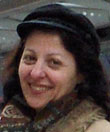
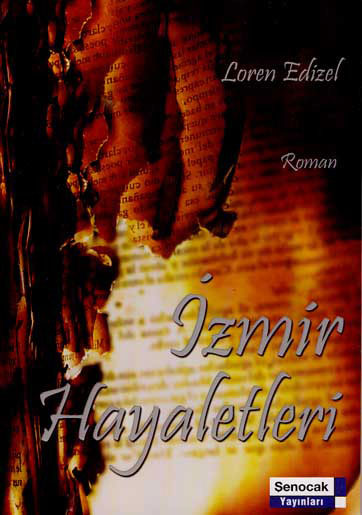
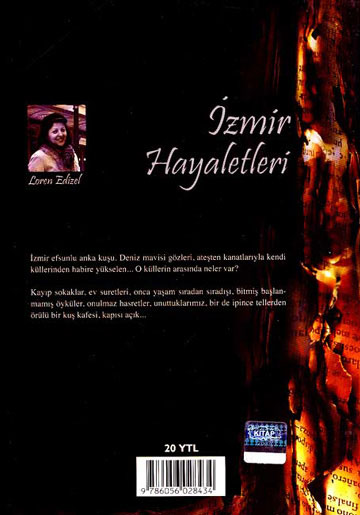
The other living Levantine writer of note is Loren Edizel, the author of ‘İzmir Hayaletleri [The Ghosts of Smyrna], Şenocak Yayınları, Izmir (2008)’, a novel of love and war. A more recent (2009) publication by a fellow Levantine of that city is Gianna Paradiso, whose work ‘Tanrim Bana Kim Olduğumu Söyle [God tell me who I am]’, is a record of her spiritual journey.
| The background to the book, ‘The Ghosts of Smyrna’ Interview conducted with the author Loren Edizel in February 2009 |
|
Is this your first book / written work?
The Ghosts of Smyrna (İzmir Hayaletleri) is my first novel. I have previously written screenplays, poems, short stories. In fact, I have written something or other ever since I could write. This novel was the result of many transformations. About a decade ago I got a Canada Arts Council grant to write a screenplay about the fire of Izmir. It had an entirely different storyline, characters and a very different feel to it. A few characters from this book were already there, but behaved differently. It was called Bitter Oranges. The script had perhaps a more epic feel to it, there were a lot of million dollar scenes that I loved imagining, but could not possibly produce. I studied filmmaking, so I wanted to make this movie. The manuscript lay around the house for a while as I eventually came to terms with the fact that no one in their right minds would produce such an expensive movie. A friend of mine who’s a documentary filmmaker and writer said one day, “Forget about screenplays. Why don’t you write a novel?” One night, out of the blue, I sat down and started writing vignettes about life in Izmir before the great fire. I wrote about ten of them and really enjoyed the process. I sent the package to a writer friend who told me to run with it. So I did.
What prompted you?
A conversation I had with my brother prompted me to write about that particular period in time. As a person who has moved away from the ancestral home in Izmir I felt one of the great issues for me centered around identity. Another one was loss. Displacement. Growing up, identity was a rather prickly issue, too. I was part of a small Christian Levantine minority in a predominantly Muslim society. I suppose having a ‘hybrid’ identity has given me much to think and write about and has afforded me a certain perspective – that of an outsider and an insider, all at once.
The Ghosts of Smyrna is about a very specific time in Izmir’s history. The Ottoman Empire is about to collapse after WWI, and a multicultural way of life that owed its existence to the particularities of that empire is also about to disappear with it. Nationalism is rearing its head. People from various ethnic backgrounds who used to live peacefully find themselves in enemy camps. The great fire itself was symbolic; one era lay in ruins, another got built over it. Izmir’s history of thousands of years has witnessed such destruction over and over, whether it was because of war or natural causes. I wanted to talk about a city that no longer exists except in memories and stories. I wanted to bring it to life in people’s imaginations.
I wanted to write a book about everyday people from all walks of life who lived there, who had nowhere to run and whose lives were ruined regardless of their religion, ethnicity, background etc. History books don’t expose the poignant details of devastation, the tragic loss of human lives, connections caused by war at the individual level. They are concerned with “les grandes lignes” and are often informed by a political/ ideological agenda which doesn’t necessarily correspond to what is remembered by those who lived through these events, the “vécu”. Novels, works of fiction bring history to the reader through the lives of characters affected by events. In my small way, I wanted to talk about these forgotten tragedies.
How long did it take?
Technically, there were a few years of research, note-taking and thinking, developing characters. The actual writing of the novel took one year. But ever since I’ve known myself, I have listened, observed, thought and also felt the need to write about things. I’d be looking at the sky, a particular moment, a face or gesture and writing it inside my head while wondering if all these observations, thoughts, images would ever culminate in something unified, one big picture. I’m grateful they did and still do.
What inspired you?
Family stories. My elders have all been wonderful storytellers. A lot happened to them; they lived through incredible hardships. As a very small child, I would sit by my grandmother and listen to stories about her childhood in Kırkağaç (a small town north of Izmir), her life in Izmir; she would say to me “someday you will write the story of my life”. My father too was a delightful storyteller – listening to him was like watching a breathtaking movie or reading a novel. There was suspense, humour, profound thought and emotion all at once.
In my immediate family, we are all multilingual. My paternal grandmother whose ancestry hailed from the Austro-Hungarian Empire (possibly Slovenia, I don’t know) spoke only Greek; when she was growing up Levantines spoke Greek. So we spoke Greek with her. My parents spoke Greek between themselves and French to us. With friends and siblings we spoke Turkish. Italian was the language in which my father swore while driving and the language in which we listened to Sunday mass. Then we learned English. We think in many languages and among ourselves we tend to speak them all at once, stringing together multilingual sentences. A language is not only a means of communication; it is a cultural expression, it is a way of thinking and perceiving things. In Canada, for instance, if you are perfectly bilingual in French and English (the official Canadian languages) your perspective of the social landscape and history may be quite different from someone who is unilingual. You can understand both points of view, and where others may see a social-political divide, you may see a bridge. A Levantine is someone who can potentially do that in a multiplicity of ways and directions. Not that Levantines necessarily do that; but it is theoretically possible. It’s a rather unique situation - painful because in places and cultures where the Levantine feels at home, he/she is not perceived as truly belonging. But the Levantine paradox can also ideally point at the possibility of a human being who is first and foremost a “citizen of the world”, and a way of thinking and living that is inclusive, truly multicultural and tolerant. The ingredients of democracy as it is desired.
Who are your favourite authors?
I have so many it would probably sound like a grocery list! It saddens me to think a lifetime is not enough to read all the wonderful books in the world. For me, the beauty of a book is in the moments- it could be a paragraph, even a single sentence- that resonate deeply in one’s mind, that make one feel a writer has gone beyond words with mere words and described the indescribable which is life itself, distilled. A great writer is one who is capable of doing this, of suffusing a story with such exquisite moments and giving the reader the gift of exploring his/her own humanity. In my opinion, to read a book for its plot is to miss the point entirely. A plot can be nice and carry one along; but the great beauty of literature lies elsewhere.
How does your childhood / parentage influence these writings?
My father (Jak Edizel 1913-1994) was an artist (examples of his work), and an intellectual. He spoke his mind and like most artists and creative minds - without really being aware of it – he was a true anarchist. He had a wonderful sense of irreverence and the absurd. There were no sacred cows. Our parents spoke to us with respect, like equals. We could disagree about things, we could argue for hours and if we made a good convincing point they would accept that argument. They raised us to think for ourselves and to have open minds.
I wrote my first poem at the age of 6. It was a love poem for my mother that I wrote in Turkish. The problem was that my vocabulary was not good enough to make the perfect rhymes. I remember it was a very long poem with 4 quatrains and I wanted to surprise her but I definitely needed adult help. My father sat with me and helped me finish it. He would give me ideas too, like “Mom, you are the column of this family” because it rhymed with something else. The thought that my mom was a column struck me as very original and I said “sure, let’s put that in, I like it.” To this day, the only thing I remember about that poem is the column-woman; and it wasn’t even my idea!
I was a busy girl. I wrote. I wrote on small pieces of paper, on napkins. I always had notebooks and diaries I could lock. I liked writing letters and poems. My favourite pen-pal was my uncle (Joseph Edizel) from Istanbul. He taught French literature and was a poet in his own right. If I wrote my thoughts about life to him, he always wrote his own thoughts back in letters that were 2-3 pages long. I absolutely adored him. I loved reading also. I read whatever books I could lay my hands on, and I loved writing short stories for school work. I was made to read them out loud in class. Once in 9th grade I stood up and read two of my stories back to back. I was only required to write one, I wrote two. The teacher –it was Turkish literature- after I had finished, asked me where I had copied them from. When I told her I had written them all by myself, she lowered her glasses slowly and looked at me with her piercing eyes, asking me if I was very sure about that. It scared me out of my mind, I got the shakes thinking she would give me a zero for something I had actually imagined and written myself. It was a wonderful compliment in a scary package. I had a lot of encouragement at home and at school and it seemed everyone knew I would be a writer, except myself. I wasn’t so sure for a long time. But they were right. It is what I love doing.
Did you delve into historical archives to research the fire of Smyrna or were they based on family / community folklore?
I spent quite a bit of time doing historical research in Montreal, namely the Concordia and McGill University libraries - reading everything I could about that period as it related to Europe, the Ottoman Empire and Izmir, in particular. I basically read everything that was available to me, and took notes. At that time, I did not yet have the story outline in mind. I looked for novels, books, short stories that were about that time and place. Then I went to Izmir. I wandered around looking for books about that period. In Kemeraltı I walked into tiny bookstores that actually sold Greek books with many black and white pictures of Smyrna and its various quarters, the great fire. I bought a lot of books, some of which were second hand. Some booksellers sent me to others. I went to the Faculty of Fine Arts /Architecture and met a professor there whose name I unfortunately no longer remember, as it was more than a decade ago. He shared archival material with me. Everyone who knew I was researching the subject was more than willing to share what they knew. There were documentaries to watch. There was a documentary movie on the fire of Smyrna and the exodus of Smyrnian Greeks with archival footage that I tried to get my hands on, through a film distributor in New York. Unfortunately I couldn’t get my hands on that one. But there was a lot of active research. My father who was really excited about my project completed a few audio cassettes for me about his recollections as a child. He actually helped me a lot. He drove me places so that I could take pictures of old Smyrnian buildings and houses. He took me to see the journalist and writer Yaşar Aksoy who had done his own research about the city and offered me further information. Then, as the story started to take shape in my mind, there was a period of passive research when I was basically looking into particular questions that arose while I was writing.
Do you know the extent to which your family was personally affected by the fire?
My father was a young boy. His family lost all their belongings during the fire. They sought refuge at a relative’s house in the hills of Bayraklı where they lived for a few years. He remembered that time quite vividly.
If you could be transported in time, when and where would you like to be transplanted to?
I like where I am! If I must choose, I suppose I would go to the distant future, hoping the human race will have figured a way to live in peace. Well, if nothing else, I can at least travel through the galaxy in search of intelligent life!
There is gross injustice, inequity, greed and ferocity in the world we live in. There is also great hope, great possibilities for change. Maybe it’s a constant in human existence – we’re not terribly bright, but we live with hope.
Do you think books can help to bring understanding between communities? Do you feel the weight of historical responsibility sometimes?
I believe so. I think literature and the arts in general have the capacity to widen mental horizons and refine sensibilities by challenging the status quo, the accepted ways of doing, saying and seeing things. A society that does not encourage and promote the arts, or tolerate critical thinking and free speech becomes ignorant and rigid; forcing everyone to see through the same funnel, as it were, by eliminating dissent. Humankind is phenomenally diverse. I think books, knowledge in general, enrich our minds making us more aware of realities other than our own. The question of historical responsibility is an important one in that context as well. How a society chooses to deal with its past has great bearing on how it functions today.
What are your future projects?
I wrote a second novel, “adrift”. The story takes place in Montreal. It recounts the life of a solitary man who works the night shift at a hospital and writes his thoughts and stories in a notebook. The narrative flows across continent and oceans, going in and out of characters’ lives and minds exploring questions of identity, displacement and meaning - more info and pre-order facility: Currently I am working on another project; a ‘road’ novel. I’d like to work on another Aegean story after that, but who knows...
Click here for a segment of this book in its original language:
Click for a review of this book by Görkem Daşkan and Virna Mulino, 2011
Click here for Loren’s web site:
Click here to read the article penned by Loren’s son, Nikola Haddad-Edizel: ‘A Delve into Displacement: Who imagines the Levantine identity?’
Click here for Loren’s submission of an article to a blog site: ‘Which Olive Tree did you sit under? What compelled them? - Questions for Ancestors & notes to descendants, September 2019’
 |
 |
Note: Loren Edizel’s latest book Adrift is a nominee for the 2012 Giller Prize, in Canada. We wish her good luck!