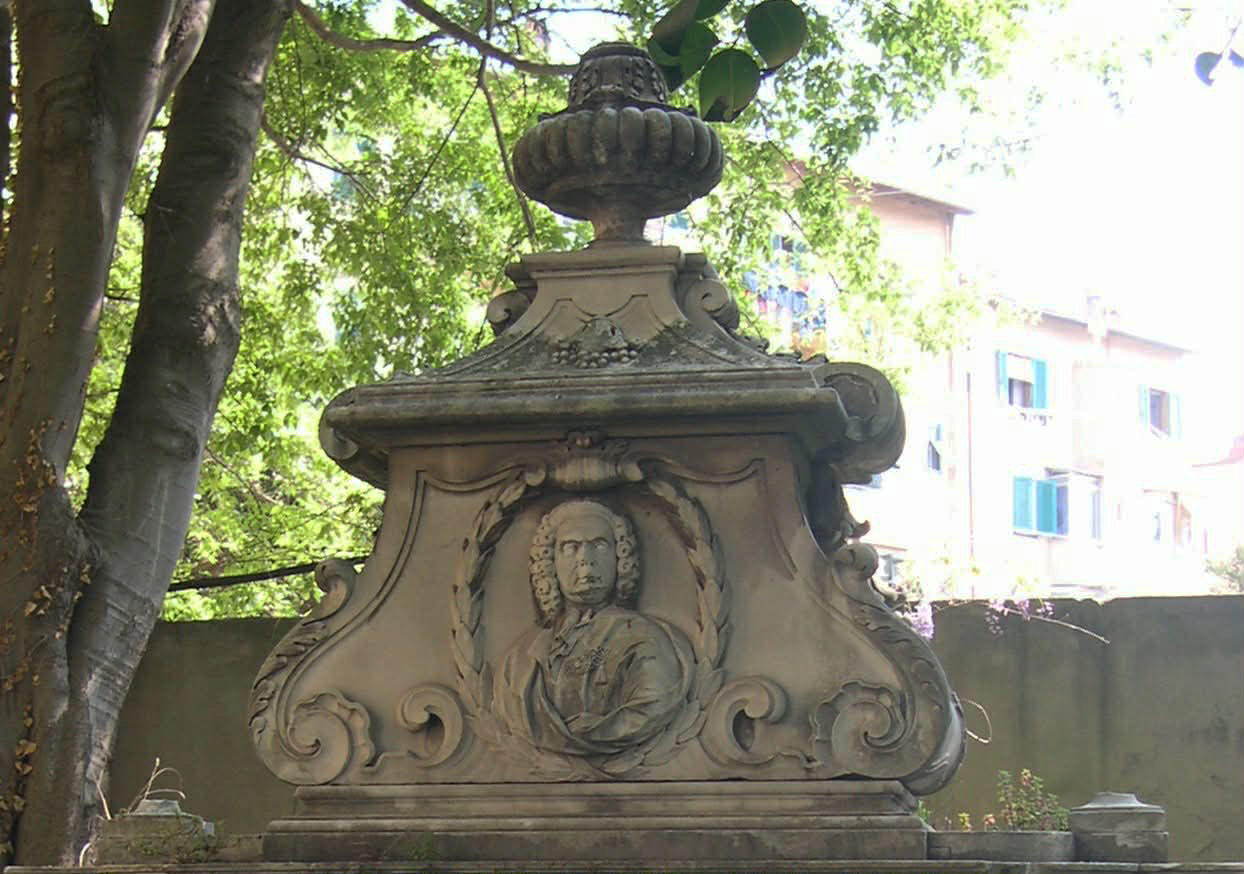

The Interviewees

Interview with Matteo Giunti, February 2026
1- What made you interested in the English cemetery of Livorno in the first place? There is an association with its website, can you tell us when it was founded and introduce other members who have been key players?
Back in 1999 I started developing an interest in my family history as my grandmother Rita Kotzian was always telling me stories and names of the past, and as I was also a computer enthusiast I thought I could put the data she was telling me in a database and start researching more for her. I then discovered a few of my family members that weren’t Catholics so I began looking for places they could have been buried. I knew there was a Dutch-German cemetery where most of my maternal family was buried but a few were missing. That’s when I discovered the existence of another protestant burial ground, the Old English Cemetery, and that was a complete surprise as nobody seemed to know much about it. It was always closed and I needed to ask permission via fax to the British Consulate of Florence to get inside. The keys were held by the local Misericordia who was supposed also to take care of the upkeep of the place. In reality it seemed very much overgrown but that added to the mystery and the feeling I was actually discovering something. This is how it started. Then fast forward to 2011, I founded the association “Livorno delle Nazioni” with the broad aim of protecting, researching and teaching about the numerous heritage sites in Livorno related to the so called “Nations” from the beginning, in the 16th century, to today. Our attention has focused mainly on cemeteries as the ideal container of very important material culture and, as the oldest one is the “Old English Cemetery”, that became our priority.
In the meanwhile I had discovered a document in London that, for the first time, put the date of 1643-1644 on the foundation of that burial ground; this was a great breakthrough as it revealed that this cemetery is actually the oldest foreign protestant burial ground in Italy and also the oldest English cemetery in the whole Mediterranean, still existing in its original form.
The original founding group of the Livorno delle Nazioni association was composed of, apart from me, Sarah Thompson, a British resident of Livorno who had already organised many cleaning days at the cemetery in the past and also had published a few articles on her “LivornoNow” blog; then Stefano Ceccarini, a local amateur urban historian who had worked immensely on creating and correcting hundreds of Wikipedia pages on Livorno’s history; then Francesco Ceccarini, who was living just across the street from the cemetery and had started cleaning it voluntarily; and finally Lisa Lillie, at the time my wife, an American doctorate student in History who then wrote her PhD Thesis on the English community of Livorno concentrating on the extraordinary material history that the cemetery contains.
The association has a small website: livornodellenazioni.wordpress.com but most of the articles related to the cemetery are on my personal blog leghornmerchants.wordpress.com.
2- How long did the Protestant community live in Livorno and were they mostly import – export merchants?
Well protestant is a broad term and in Livorno there were many different protestant communities revolving around the central figure of a Consul and as such they were called “Nations”. The English Nation, later also known as the “British Factory”, had their first Consul established in Livorno around 15xx, and along the centuries it became really important and transformed Livorno into the main “English” port in the Mediterranean. Livorno, being a free port with a specific system of rules and laws which encouraged merchants of all provenances to bring their goods into the city and then re-export them, was a sort of hub and its fortunes were made around it being a Port of Deposit. So, like all the other merchant communities, the English community was mainly composed of merchants with bases all over the world importing goods into Livorno and then exchanging the goods with other merchants and re-exporting them. There were, at the beginning, also a conspicuous number of sea captains living in Livorno.
3- How well was that cemetery documented before your book?
Poorly is the term I would use. There was hardly any study apart some important articles by Prof. Stefano Villani. The rest of the very few references essentially came from some old sources that were mostly scientifically inaccurate. Apart from Dr. Villani who already supposed the foundation date to be around the middle of the 17th century, all other scholars maintained that it was founded a century later... It must be said, though, that the first documents pertaining to land property in Livorno date from 1646, so just a couple of years after the cemetery foundation. That is probably the reason why no one could find any documents, in local archives, to establish a foundation date.
4- Clearly many of these merchant families were established in Mediterranean ports for generations, have you been able to trace some of their former family and business networks across the sea? Do you think there is more work to be done in this wider research?
Yes, well this is essentially what my “Leghorn Merchant Networks” project is all about: reconstructing the family, commercial and social networks of all the foreigners of Livorno, from the early 17th. century onwards. This project started in 1999 and since then I continued adding data to a relational database which has now grown considerably.
5- Have you had any luck connecting with any of the descendants buried in the cemetery?
Sure, as this is one of the long-term objectives of mine. Thanks to my blog and the different burial lists I have published, during the years some descendants contacted me and successfully connected to their ancestor in this and other Livorno cemeteries. Apparently, apart a couple of cases, nobody seems to be interested in any kind of restoration of the tombs, but I hope in the future it could be possible to form a sort of “friends of the cemetery” association or group to try to fund some restoration.
6- How well is the cemetery protected both physically and legally?
Poorly, until now, but it is getting better. Both English cemeteries in Livorno are still the property of the British Government but since 1949 their maintenance have been delegated to a local branch of a very old charity organization. In 1991 the “Soprintendenza di Pisa” inscribed the old cemetery in their list of protected historical sites. Since 2011 our association invested a lot of time and efforts to check the proper maintenance of the two sites. We continuously controlled the status of the tombs, trees and actions that were made by the charity, reporting dozens of times some improper behaviour to both the Soprintendenza and the Consulate/Embassy. In the long run our efforts determined an incredible change as the British Government finally decided to revert the full control of the two cemeteries and their maintenance to themselves. This occurred in 2018. In the meanwhile we managed to get fundings from a local Foundation to finance the extraordinary maintenance actions required by the project we had made together with the University of Pisa back in 2012 (which was then published in our book in 2013). This project is being realized right now to protect the graves of the cemetery from falling trees and invasive plant species. At the moment we are awaiting to know if the authorities intend to proceed for the ordinary maintenance, protection and opening of the two cemeteries.
It has to be noted that neither of the two cemeteries are represented in official local maps which are given every year to hundreds of thousands of tourists... moreover the only ridiculous tourist sign present at the old cemetery is still indicating the foundation date to be 1737, without further information...
7- Where are the other nearest Protestant / foreign cemeteries in Italy and do they have a similar history?
Let’s start by saying that there’s no other place like this cemetery in Italy as it pre-dates any cemetery of that kind by two centuries! The nearest protestant/foreign cemeteries are located again in Livorno and are the “second generation” cemeteries of the different “Nations” of Livorno such as the Dutch-German cemetery and the Greek-Orthodox cemetery, both had predecessors which have unfortunately been destroyed or dismantled.
I am trying to trace the history of those, too and do my best to protect them and publish data on the graves and people involved with them.
8- How was your recently published book received academically and do you have plans to have an English summary published somewhere?
I believe well, but I’m not the good person to ask as I am not an academic. I have seen that it has been cited by several academics in their books and articles though. I would also consider the fact that the book is about a very specific and niche subject!
As for the English summary, sure I’d love to have at least the historical chapters to be translated into English. Hopefully this is something we could do in the future - book summary:
9- Who are your backers and sponsors for this project / restoration?
At the beginning nobody was backing any of our projects then later on we managed to collaborate with a banking foundation in Livorno and in the future we hope to collaborate with diplomatic authorities such as the Embassies of different countries in Rome.
10- Have there been conferences connected or under the umbrella of the Association?
Yes, many, both for adults and for schools and we are continuing to do so. The last one was for school kids aged 14-16 about the Old English Cemetery all in English!
11- Nearby this old cemetery are 2 Protestant churches: the St George Anglican Church on Via Verdi opposite the Anglican cemetery the Waldensian Evangelical Church on the same street, originally constructed for the Scottish Presbyterian community in 1849. I believe both churches have long-since been passed on to other religious groups who use them for their masses. Have you been able to access the original church registers including burial records for these churches, presumably kept in London, to cross check against visible tombs and what is no longer visible? Do we have rough number of burials here and when was the last one, as far as records show?
It’s true that both Churches are now being used by other communities: St. George by the Orthodox Romanian community and the other church is still in use by the Waldensian community.
As for the registers of the protestant communities I gathered, along the years, all of the registers that I could find, especially in London. I reproduced them digitally, indexed them, included all the data in my prosopographical project “Leghorn Merchant Networks” and compared the existing graves to the data in the registers as well as identifying the lost graves by marking them in the cemetery whenever it was possible with a quite complex process. Until now I identified about 30 - 40 of the missing graves. As far as the Old English Cemetery is concerned, the burials started in 1643/4 and ended in 1840, when the New English Cemetery was opened. The total number of burials is difficult to calculate as the burial registers start in 1707, over 60 years after its opening. Anyway, my data indicates about 1280 burials and, before the World Wars there were around 540 monuments of which now we still have about 430 plus those 30 - 40 identified by me as graves but without a monument.
12- I believe you are distantly related to the eminent Giraud and de Hochepied families of Smyrna. Was this an additional impetus in you devoting so much energy in this cemetery project and do you know much about the lives of those ancestors?
Well, the work I began on my own family was essential to appreciate the value of the ancient cemeteries of Livorno. I have gathered information on my ancestors for the past 26 years so there’s quite a bit I know now about them. The relationship with the Giraud/De Hochepied family comes from a marriage of a descendant of these families, Rowena Giraud De Hochepied, with a far cousin of mine, Pierre Senn (Senn family descendancy chart). Additionally I have discovered that I also descend from a family who originated in Heraklion named Candachiti that came to Livorno in the 17th century.
13 - Do you have a ‘favourite’ tomb in the cemetery, perhaps because of the artistic merit of the tomb or the colourful story behind the person?
Depending on the point of view I have several “favourite” tombs in the cemetery... a few would be those of Robert Bateman, George Jackson, Marie Michel and practically all of the 17th century tombs because of their extraordinary importance in Livorno and their special architecture which mimics the Sephardic tombs of the same period. Also, that of Tobias Smollett is indeed among my favourites as I worked so much on it. There are many more though and it would be quite a long list to be written here!
Interview conducted by Craig Encer
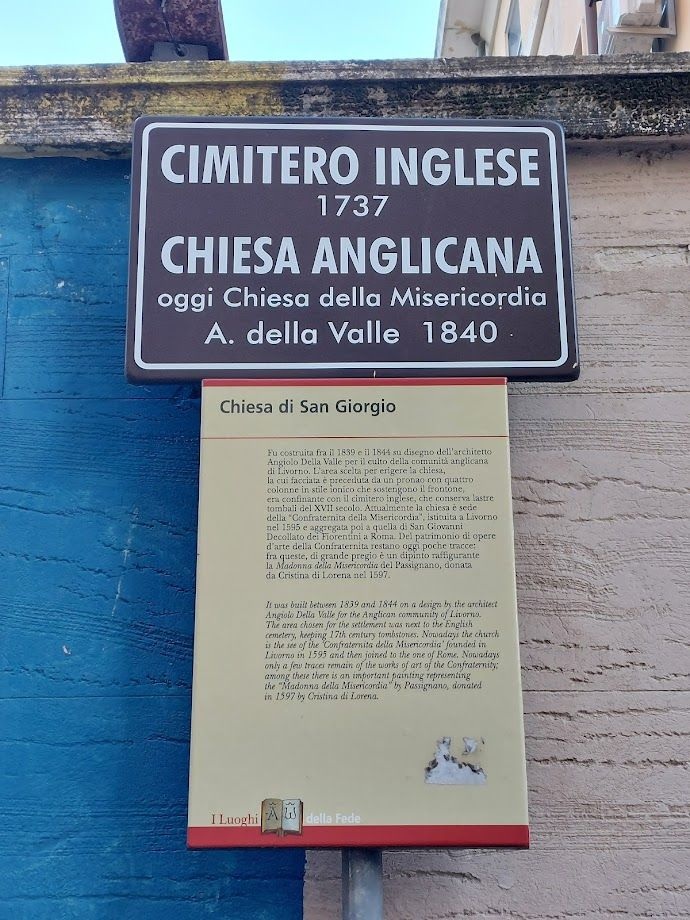
The local sign indicating the incorrect date for the establishment of the cemetery.
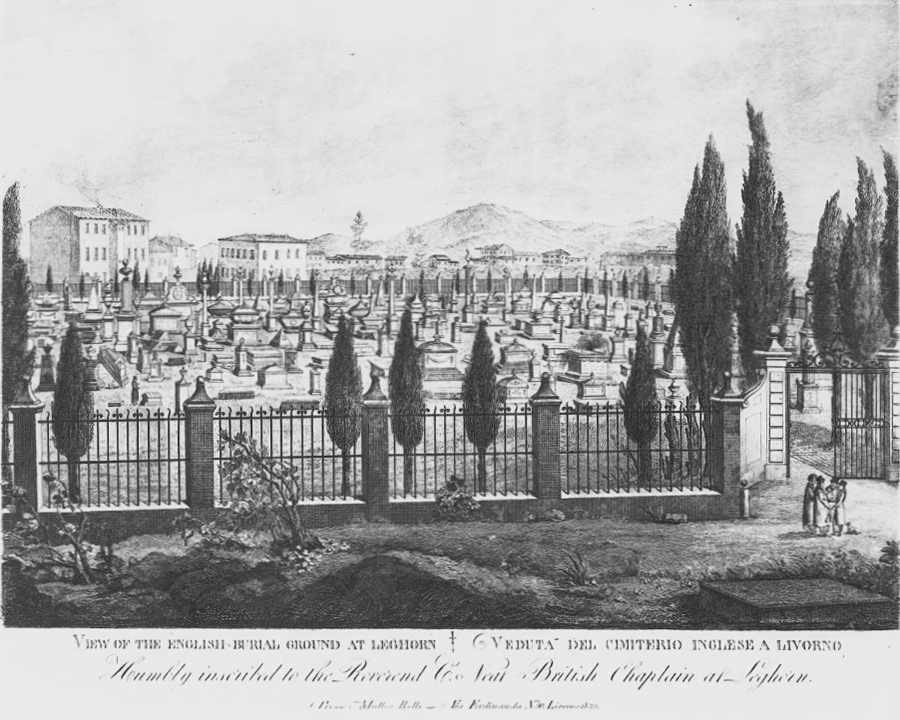
The burial ground as depicted in a 19th century print.
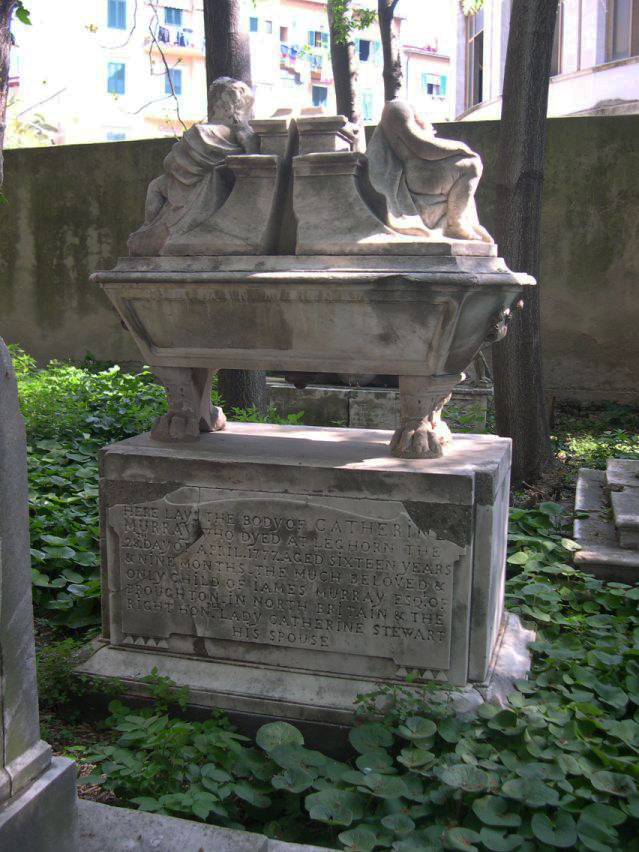
Tomb of Catherine Murray.
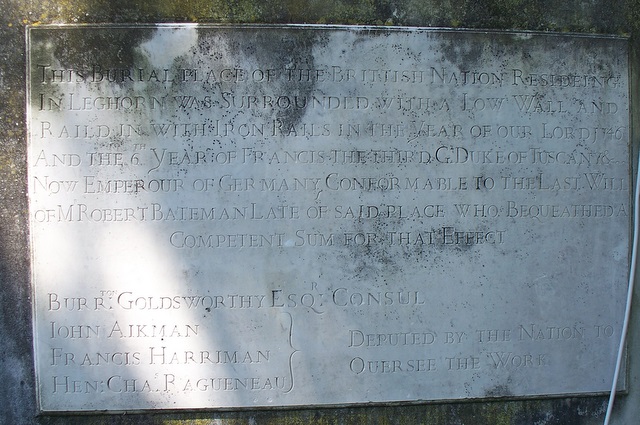
Consular stone plaque indicating this burial ground now (1746) being protected with a low wall and iron rails according to the last will of M Robert Bateman a local wealthy English merchant.
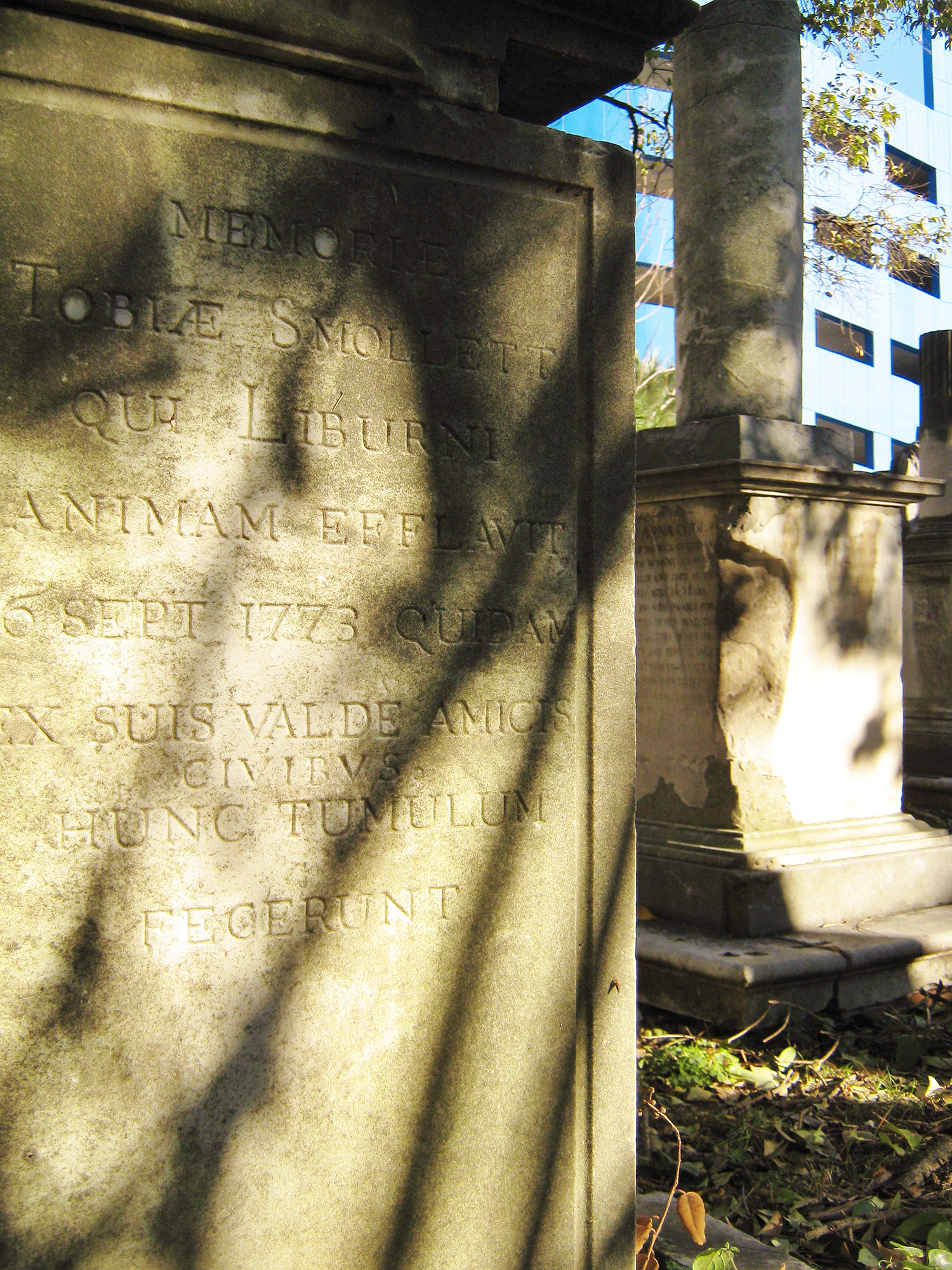
Tombstone of Tobias Smollett (1721 – 1771), Scottish writer and historian. His obelisk tomb is historically among the most visited in the cemetery.
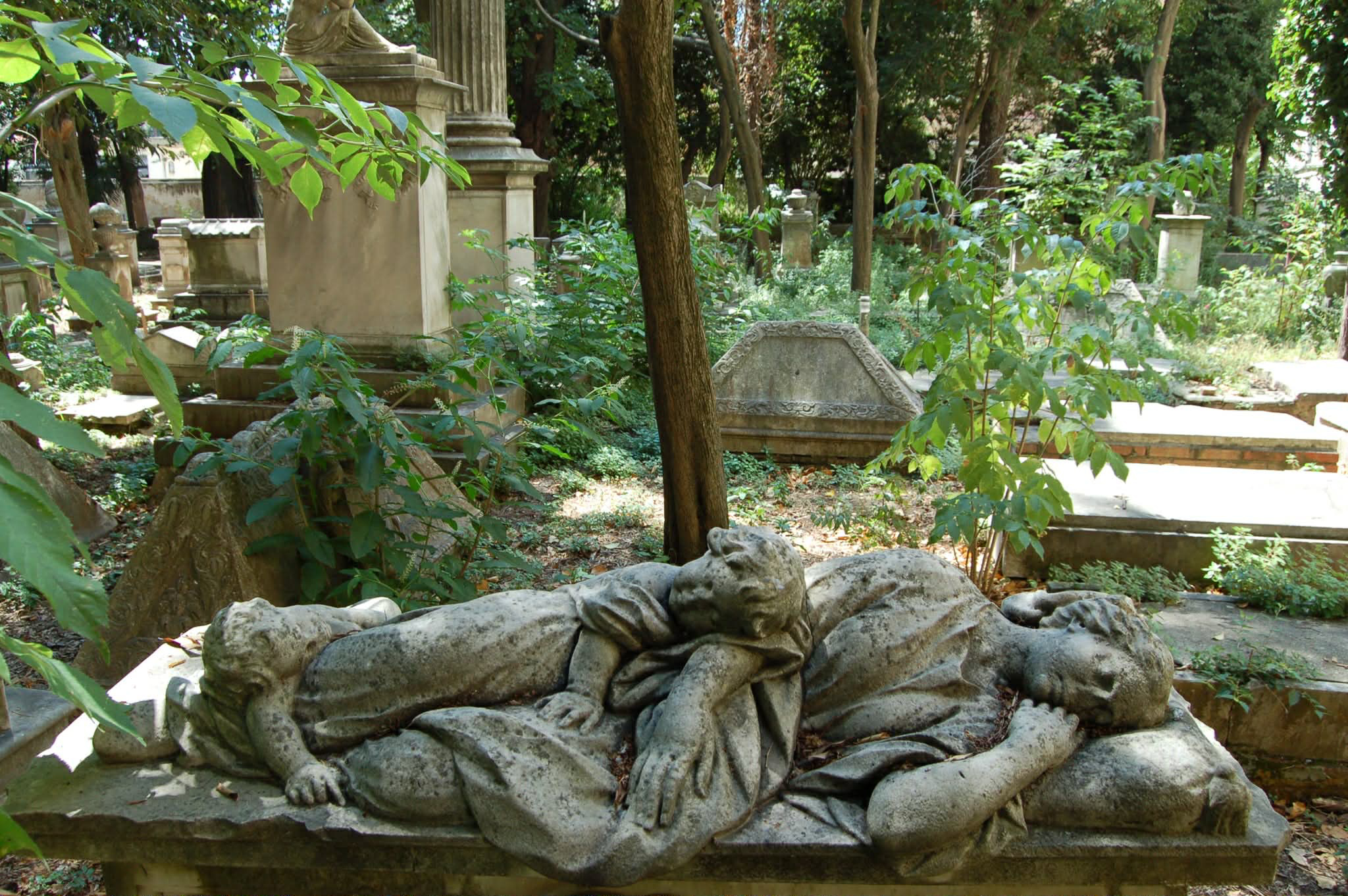
Tombstone of Marie Michel.
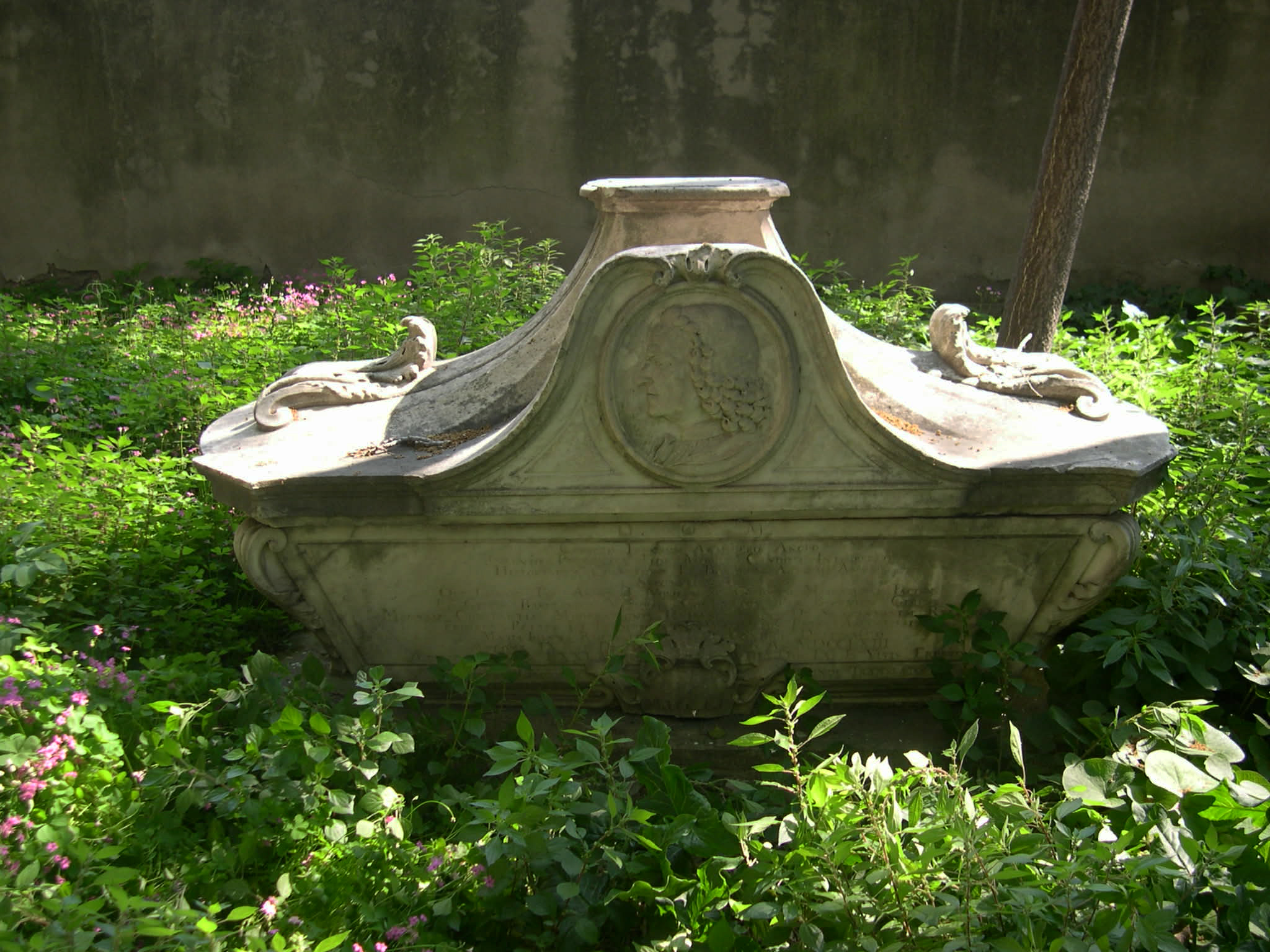
George Jackson tomb.