
Ephemera
La Centrale School
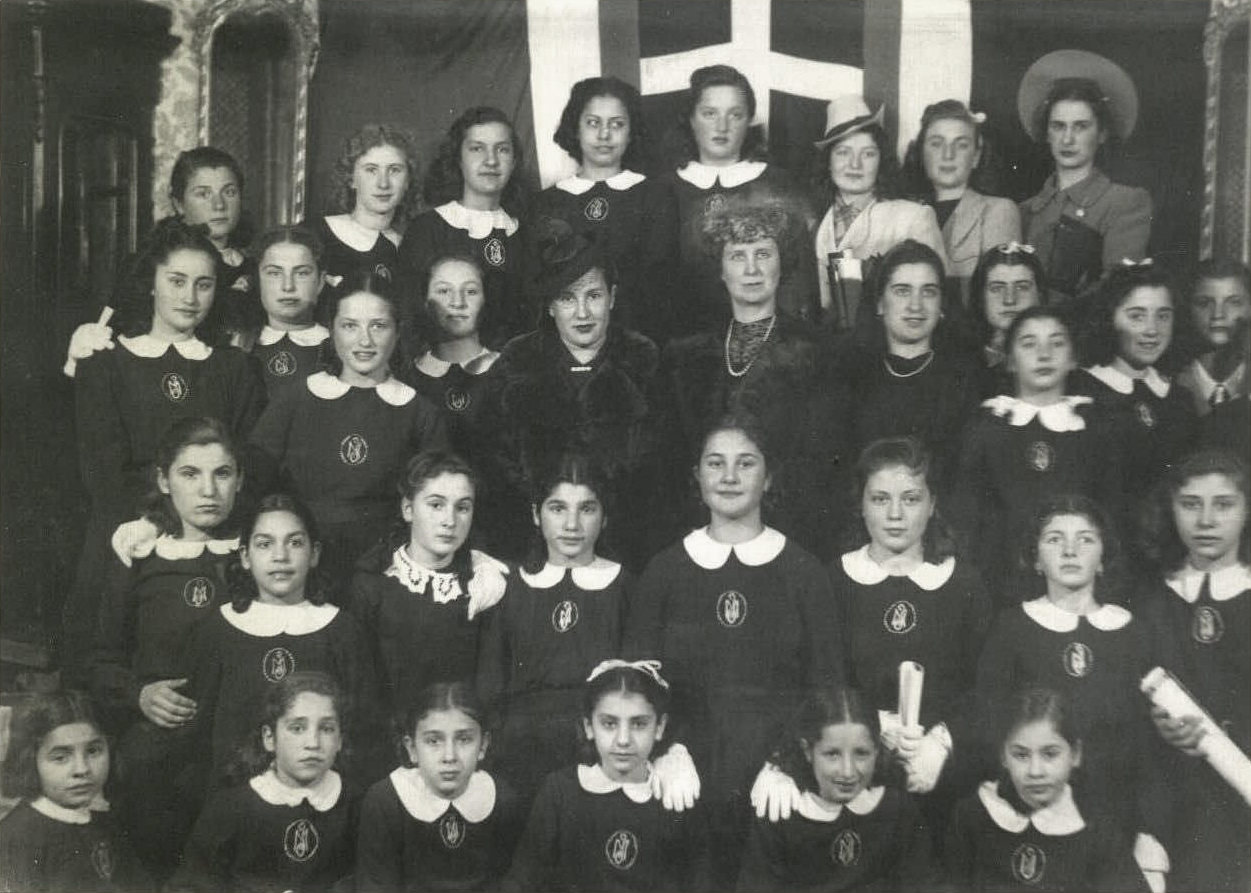
The Scuola D’Ivrea Centrale, run by the Italian Sisters under the order of ‘Suore dell’Immacolata di Ivrea’ operated from late Ottoman times (1908?) to around 1945 when it was demolished for road widening. It was the chief primary school for the Italian Levantines of the city for generations.


The entrance stairway of the Scuola D’Ivrea Centrale, run by the Italian Sisters under the order of ‘Suore dell’Immacolata di Ivrea’.


View around 1930 from this zone, still showing extensive fire damage in the neighbourhood.


The building in the distance relatively undamaged post 1922 fire.
alternative view of the building post 1922 fire.

View image in digitally colourised version.

Closer post-fire views of the Centrale School with what appears to be a possible fire damaged chapel next to it? In the upper photo the chapel appears to have its roof missing and the middle portion building has a half-standing outer wall and the shadow of the former roof on the main building suggesting funds after the fire were not sufficient to rebuild and so a lower roof was placed instead.

Front entrance to the main building.
One of the silhouettes of Izmir before 1922, the Italian College, construction of which began in the autumn of 1904 and was completed in 1906, was the most important school belonging to the Italian community, the Kordon Italian Girls School (1906-1945), which only lasted 39 years. Known among the public as the “Italian Girls’ School” and originally as the “Istituto centrale femminile (di Smirne)”, this structure, which was the largest Italian school in Izmir, was opened on 6-7 October 1906 during the reign of Ottoman Sultan Abdulhamid II (1876-1909) and King Vittorio Emanuele III of Italy (1900-1946). The school was built at the point where Dokuz Eylül University (DEÜ) Rectorate building was located, which was the most central point of Izmir in the 20th century. It was located on the "2nd Rıhtım Street", or Second Kordon (Cumhuriyet Boulevard) as it was called at the time.
If Izmir had remained in Greece after WW1, the school was planned to be converted into the Ionian University and become the central building.
Its style resembles a mixture of Neoclassical and Renaissance styles. The design of the corners is a copy of Henry Labrouste's National Library in Paris. The lower floors were covered with obelisk; they were decorated with frescoes made by Ernesto Smeriglio together with Rigorini and Verdoja. The design was carried out by Stefano Molli and the construction was carried out by Luigi Rossetti. The building was demolished for the construction of the road.

Cumhuriyet Square with the La Centrale School in the distance. The statue of Ataturk on horseback was created by the Italian sculpturer Pietro Canonica. The date of this postcard would be post-1933 as the square is created, but pre-1947 when the Centrale Italian School visible in the background was demolished to make way for the road expansion of the 2nd Kordon and Vasıf Çınar Boulevard.

The location marked in a red box of this probable school chapel, not yet in construction phase as with school when this Goad map was drawn in June 1905, although it was included in the original plans as part the school complex as seen. It was built some time later, and that’s why it was located in the block to the east of the school. It was burned in 1922, as was the eastern, lower part of the school. Map analysis courtesy of George Poulimenos, 2018.

The building near the shore is the İzmir Palas Oteli. It still exists on the Quay, though widely rebuilt.

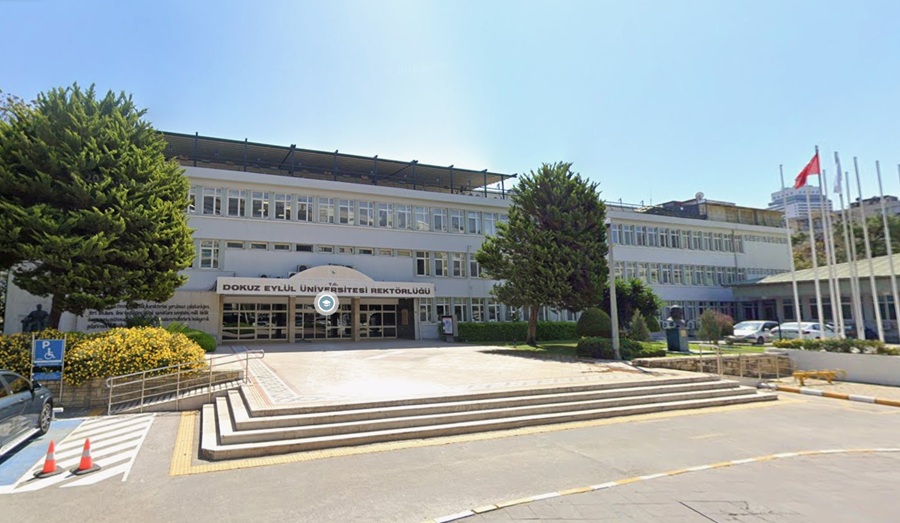
The approximate location of the former school is today occupied by the Rectorate building of the Dokuz Eylül University on the intersection of Cumhuriyet Boulevard and Vasıf Çınar Boulevard, Alsancak.


Centrale, “La Piccola Olandese” [The small Dutch girl] theatre production early 1940s. Below other school productions from the 1940s.
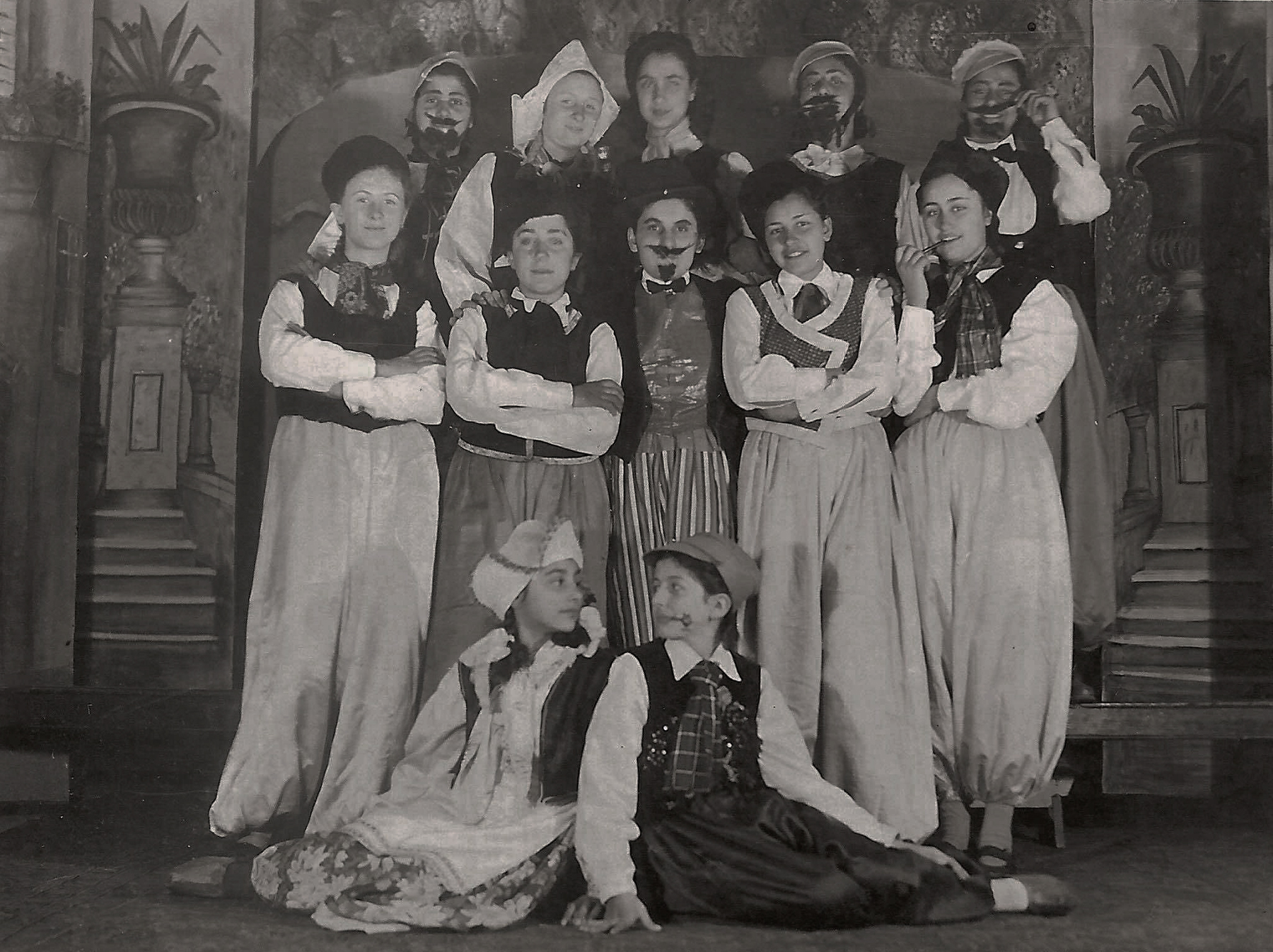
Scuola Italiana - Centrale 1943-1944 play again “La Piccola Olandese”, seated from the left: Odette Ragusin Braggiotti (Violetta), Teodora Tarabocchia Braggiotti (Dick); Standing from the right, first row: Maria Ventura, Marica Capponi Corsini, Yolanda Delpino, Giacomina Cocchini, May Pennetti; Second row from the right back: Lucia Scagliarino, Rita Reggio, Enrichetta Pincasfeld, Maria Pavlovitch Kokini, Maria Giudice.
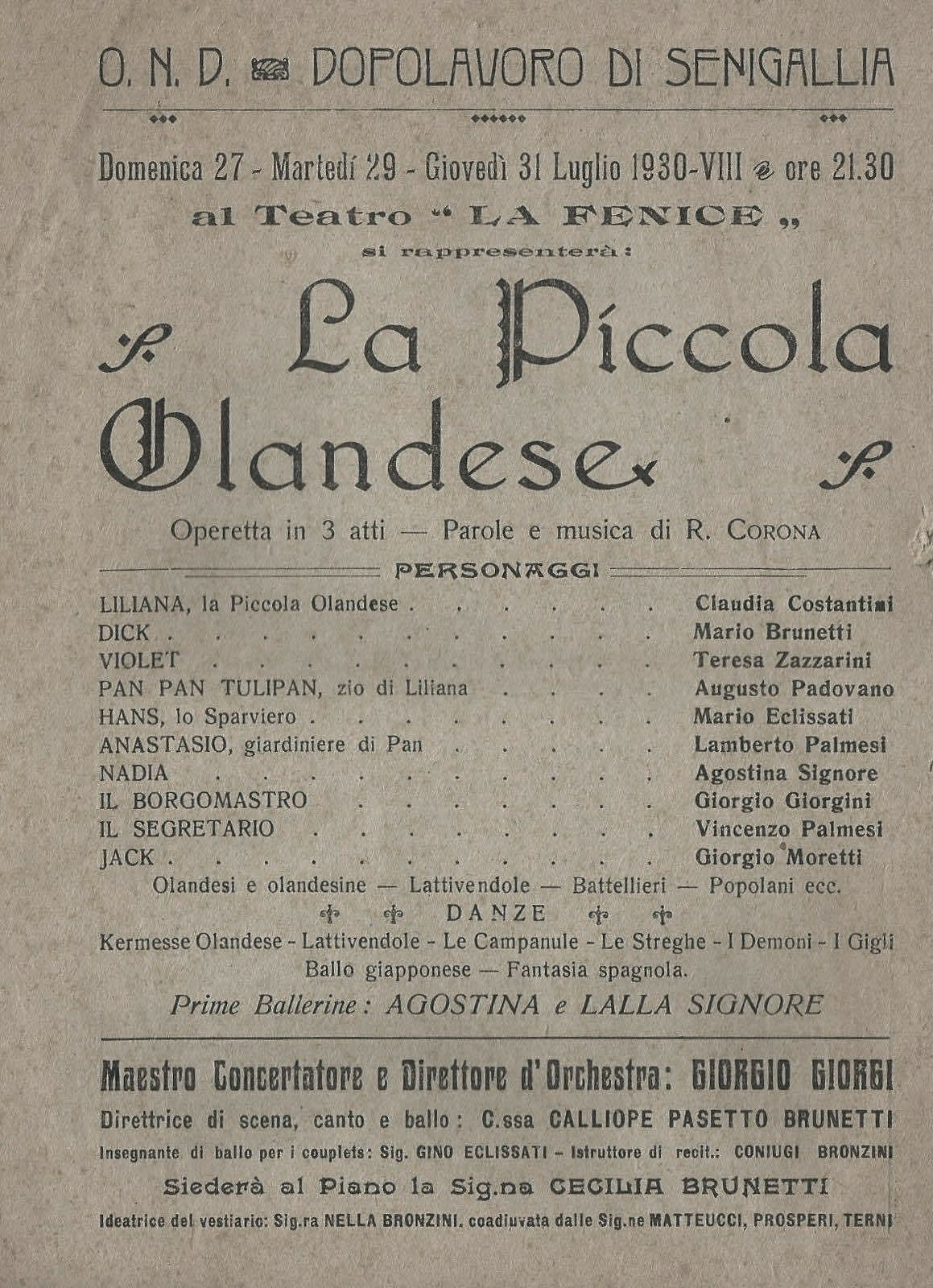
Poster for the same play played by professionals in the La Fenice theatre in Venice in 1930.


The Italian tricolour with the House of Savoy shield in the middle dates this photo to pre 1946.


La Centrale, 1940-45 period, from left to right: 1. Maria Tito Deuell, 2. Lucia Marinelli Paradiso, 3. Angela Papagno, 4. Dea Pennetti Perini, 5. Alba Pennetti Dragonetti, 6. Mercedes Filippucci Petit, 7. Livia Mellini Fossi?

La Centrale, 1940-44 period: Sitting left to right: Anna Dilernia, Cristina Richichi Finale, Angela Papagno, Marie Macri Ventura - standing left to right: X, Mercedes Filippucci Petit, X, violinist Italia Tito Petrini, Giulia Ciucci Toctan, Dea Penetti Perini, X, Alba Penetti..