
The Interviewees

Interview with Julian Evans, September 2025
1- Odesa is clearly not ‘just another port’ but the lifeline of Ukraine, particularly now and historically at the edge of competing empires and yet, survived multiple potentially lethal ruptures. Do you think the people of Odesa are a ‘hardy bunch’ even by Ukrainian standards?
Odesa’s people are, I think, first and foremost survivors. In the middle of missile strikes and blackouts, they show remarkable adaptability and solidarity. From people like my friends Vitaliy and Vova, distributing food to displaced people and villages, to the Odesans you see sunbathing in sandbagged machine-gun emplacements and dancing in the streets, they go on living, treating life with black and throwaway humour, finding alliances and tricks to keep going. Survival has been in their DNA from the 19th-century boom years onwards. Ukrainians in general have learned to make their way through everything that history, the Russian empire, the 2nd World War and the USSR have thrown at them; Odesans have their own style of survival, which usually involves a lot of jokes and sarcasm.
2- It was November 2022 when you decided to write this book on Odesa, 28 years after you first set foot in that city. Was the trigger for that decision that memories of yours and those around you were also under threat beyond the physical aspect of the city and country? So was this part of your resistance to that ongoing Russian violence that aims to erase the whole notion of the city, region and country identities?
I went to Odesa in the winter of 2022 with no clear idea of what I would do there: I simply had a feeling that England was not where I belonged and that I should go to see what I could do to help. So I arrived there in the hours after a missile strike and the middle of a blackout, and from the moment I arrived, things that happened in the darkness sparked memories of the Odesa I had known before. The book grew from that seed in the dark. Russia’s war was, in part, a war of flashbacks for me because every memory I had was under threat of having no future, and in very small part my resistance was the same as Ukrainians’ resistance. Everyone was, and is, fighting for what they remember: memory is after all the deepest foundation of identity and culture.
3- Do you find it unremarkable that the first play staged at the Odesa Opera House after the full invasion of 2022 was based on the father of Ukrainian literature Taras Shevchenko’s poem ‘Kateryna’, a world premiere, whose main theme is the tragedy of a Ukrainian girl who falls in love with a Russian soldier in the 19th century. Do you detect a deeper message there, perhaps even to present day Russia itself through that choice?
I don’t know. Cultural relations between Ukraine and Russia have been on a crash dive since February 2022, and in a (formerly) Russian-speaking city like Odesa that’s a deeply complicated ethno-cultural and ethno-linguistic question. I don’t think one play really provides a deeper message.
4- Clearly Odesa made a huge impression on you from your first visit and still does. Have you been able to compare or feel a similar a ‘country beyond the wardrobe’ in other places or ports you have visited in the past? Or could it be that the central authority for this city was always far away and so the city did develop its own organic and slightly chaotic style, imprinting its culture till today?
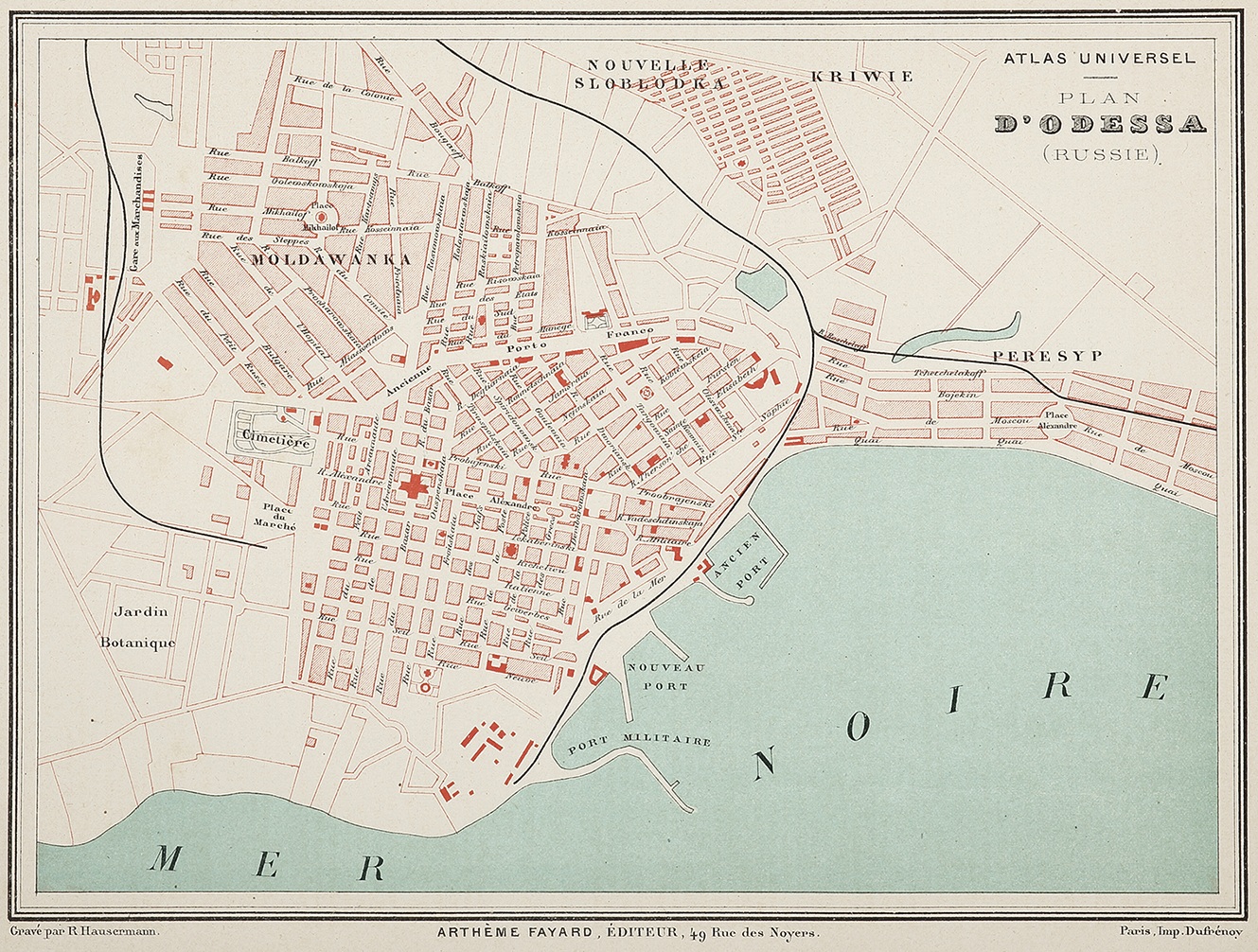
No. Although I love Naples and many other cities, from Paris to Port Vila in Vanuatu, I’ve never detected that mix of dreaming and raw drama that Odesa possesses. Perhaps that’s because the city itself has played a double game for 200 years, as an imperial jewel and a cosmopolitan European city by virtue of its architecture, immigration, masterplanning by French governors, and living on its wits.
5- There is a prominent statue of the Duke of Richelieu, a later French statesman and earlier a senior officer in the Imperial Russian Army, achieving the grade of major general. In the eleven years of his administration, Odesa greatly increased in size and importance, eventually becoming the third largest city in the empire by population. The grateful Odesans erected a bronze monument to him in 1828. It is hard to imagine a statue of a foreigner in present day Russia surviving and protected till today and do you think this shows how much the people of Odesa care and celebrate their unique and multicultural history, an antipathy to the revanchism that Russia is now hell-bent on pursuing?
A bit difficult to answer this. It certainly shows that Ukraine isn’t Russia and is open to, and celebrates, multiple outside influences rather than calling them foreign agents.
6- You describe the city was built to ‘seduce from every angle’ probably helped along by the fact the first 2 governors were French. Do you think there was a shrewd move beyond cosmetic, but helping attract both investors and manpower from a whole range of ethnicities and trades to drive this relatively new city, possibly like New York had done with its landmarks including the statue of liberty?
The early governors encouraged immigration into the city and the surrounding countryside to cope with its economic growth, and Greeks, Italians, Jews, French, Armenians and others flocked to the town. In the mid-19th century the street signs were in Russian and Italian, and by the late 19th century a third of the city’s population was Jewish. Only half spoke a Slavic language. From the perspective of cultural identity it wasn’t a Russian city at all, but a city state of its own, by accident and design.
7- You clearly love many of the buildings of Odesa and no doubt many are crumbling through ravages of time, the present war not helping at all. Do you have a favourite building or monument that if you could secure the funds, you would want to restore, perhaps in concert with UNESCO that has declared the city centre a world heritage site in 2023?
I can’t really answer this – complicated by UNESCO classification.
8- Odesa is just beyond Russia’s land grab, but still suffers drone and missile attacks almost daily. Yet the population mostly stays put and gets own with their affairs. Do you think there are lessons for us all that one way to deal with tyranny is not to be cowed by that as that is perhaps half-way to surrender?
I think the whole of Ukraine has demonstrated that lesson.
9- Can you recommend some books on Odesa or by authors from that region?
Vasiliy Beletskiy, Kriminalnaya Odessa, Odesa 2003.
Patricia Herlihy, Odessa: A history 1794–1914, Cambridge, Mass. 1986.
Patricia Herlihy, Odessa Recollected: The port and the people, Cambridge, Mass. 2019.
Tanya Richardson, Kaleidoscopic Odessa: History and place in contemporary Ukraine, Toronto 2008.
Yelena Yemchuk, Odesa (photographs), London 2022
Stephen J. Zipperstein, The Jews of Odessa: A cultural history 1794–1881, Stanford University Press, 1985.
10- Is there an organisation you would recommend to help the brave people of that city?
Assist Ukraine or Bake For Ukraine.
Interview conducted by Craig Encer